
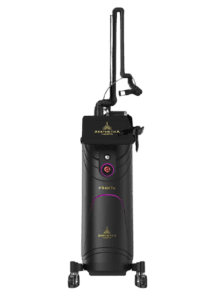
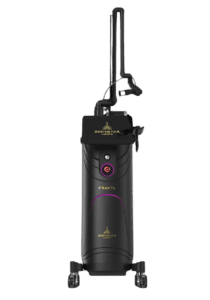
CO2, Er:YAG, or Fraxel: choosing the right resurfacing laser pre-owned
Choosing a pre-owned resurfacing laser requires balancing clinical outcomes with smart business decisions. You want meaningful wrinkle and scar correction with realistic downtime, while making an investment that fits your patient base and staff skill set. When evaluating a pre-owned resurfacing laser, device selection affects outcomes, bookings, consumable costs, and your long-term service plan.
This guide breaks down fractional CO2, Er:YAG, and non-ablative fractional platforms like the Fraxel family, with plain-language pros and cons for wrinkles, acne scars, texture, and recovery. You will also find a practical pre-owned buyer checklist and insight on how to position treatment packages for your market.
How Each Pre-owned Resurfacing Laser Modality Differs
- Fractional CO2 (10,600 nm) is an ablative laser that vaporizes micro-columns of skin and heats surrounding tissue. It is typically the strongest option for deeper wrinkles, etched-in lines, and non-inflamed acne scarring. Expect fewer sessions, higher single-visit impact, and longer downtime. (For general regulatory context on medical lasers, see the FDA’s overview of medical laser devices.)
- Er:YAG (2,940 nm) is also ablative but has a higher water absorption coefficient. It ablates more efficiently with less thermal spread, which can translate to precise tissue removal and potentially quicker recovery. Full-field Er:YAG can be aggressive; fractional Er:YAG provides a versatile middle ground for fine lines, texture, and mild to moderate scars.
- Non-ablative fractional (for example, the Fraxel family from Solta Medical) creates controlled dermal injury without removing the epidermis. It generally requires more sessions with shorter downtimes and a gentler adverse event profile. It is popular for texture, pigmentation, and early lines.
Outcomes vs downtime: setting expectations
Wrinkles and etched lines
When evaluating a pre-owned resurfacing laser, setting realistic expectations around recovery and results helps prevent dissatisfaction and unnecessary retreatments.
- Strongest single-session correction typically comes from fractional CO2 at moderate to high densities and energies. Deep perioral lines often respond best to CO2.
- Fractional Er:YAG can smooth fine to moderate lines with less char and less heat diffusion. For very deep rhytids, CO2 still tends to win on potency.
- Non-ablative fractional improves early lines gradually and preserves daily routine, but it is not a one-and-done for etched wrinkles.
Acne scars and texture
- Atrophic acne scars respond well to both fractional CO2 and fractional Er:YAG. CO2 offers more collagen remodeling per session; Er:YAG can be more precise for mixed scar patterns and thin skin.
- Non-ablative fractional helps with shallow rolling scars and pores but usually needs more visits.
Pigment and tone
- Non-ablative fractional platforms are often favored for mottled pigment and dyschromia with lower risk of post-inflammatory hyperpigmentation when parameters are conservative.
- Fractional ablative options can also even tone, but parameter selection and post-care are critical, especially on higher Fitzpatrick types.
Typical recovery windows
- Fractional CO2: social downtime commonly 5 to 10 days depending on density and energy; pinkness can persist several weeks.
- Fractional Er:YAG: 3 to 7 days social downtime is common; erythema often resolves faster than CO2 at comparable endpoints.
- Non-ablative fractional: 24 to 72 hours of redness and swelling with a “sandpapery” feel for several days.
Pros and cons practitioners actually feel
Fractional CO2
- Pros: highest ceiling for wrinkles and scars per session; fewer visits; strong revenue per treatment.
- Cons: longer downtime; more intense aftercare; higher risk of PIH on darker skin if parameters and prep are not optimized.
Er:YAG
- Pros: precise ablation, less thermal injury, potentially faster re-epithelialization; excellent for fine lines and texture.
- Cons: may require more passes or sessions to match CO2 endpoints for severe rhytids; learning curve for parameter finesse.
Non-ablative fractional (Fraxel family)
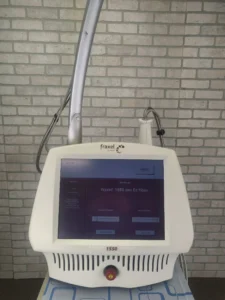
- Pros: shorter downtime, broader candidacy, good safety profile when protocols are followed; easy to bundle in 3 to 5 treatment plans.
- Cons: more sessions and cumulative chair time; softer single-visit impact for deep lines and scars.
Translating patient needs into device choices
- Deep wrinkles and smoker’s lines: fractional CO2 platform with a reliable scanner and surgical-grade beam profile.
- Mixed acne scarring on combination skin: fractional Er:YAG or fractional CO2, with test spots and conservative passes; consider staged sessions.
- Early photoaging, pores, and uneven tone where downtime is a barrier: non-ablative fractional course, packaged as a series with skincare support.
- Higher Fitzpatrick types: err on conservative settings with non-ablative fractional or consider energy-limited fractional Er:YAG. Pair with pigment-stabilizing topicals and strict sun control.
If you are building a diversified menu, a fractional CO2 plus an RF microneedling system creates range for deep remodeling and low-downtime collagen induction. Browse current options for RF microneedling machines to round out your service menu.
Package positioning and pricing logic
- Non-ablative fractional: sell in series of 3 to 5, spaced 4 weeks apart, with a loyalty perk for future maintenance. Include SPF and soothing post-care in the bundle.
- Fractional Er:YAG: plan 2 to 3 visits for moderate change. Price per session below CO2 but above non-ablative per visit.
- Fractional CO2: typically 1 to 2 sessions per area. Price as a premium corrective service with clear pre-care and aftercare. Offer an add-on non-ablative fractional or RF microneedling touch-up at 3 to 6 months.
When comparing capital costs, a quality refurbished dermatology laser system can bring your break-even forward by months compared to new. Factor warranty, installation, and availability of manuals to lower onboarding friction.
Pre-Owned Resurfacing Laser Buyer Checklist
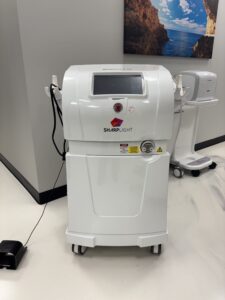
- Scanner and optics: inspect scanner mirrors for pitting and drift, verify even fractional patterns at multiple densities, and confirm spot size consistency. Open the handpiece to examine lenses and protective windows for haze or burns.
- Calibration and logs: request recent calibration records, internal pulse counters, service history, and any software revision notes. Ask for a demo at low and high fluences.
- Handpieces and tips: confirm model numbers, serials, and remaining life on consumable tips or filters. Price replacements and check current availability.
- Beam quality: perform a burn-paper or acrylic test under supervision to assess beam uniformity, divergence, and ring artifacts.
- Cooling and suction: listen for bearings and fans; confirm smoke evacuation accessory compatibility.
- Manuals and training: confirm inclusion of operator and service manuals. Ask about on-site or virtual training availability and cost.
- Warranty and installation: clarify warranty term and coverage scope. For heavy platforms or those shipped disassembled, confirm installation is included and scheduled.
- Regulatory fit: verify FDA clearance status for your indications using the FDA’s 510(k) database and check any local licensing needs, especially for cross-border purchases.
You can browse current CO2 laser for sale listings to compare pulse counts, included handpieces, and warranty terms across brands.
Refurbished Pre-owned Resurfacing Laser Systems, Brands, and Support
Refurbished aesthetic lasers can deliver excellent value if they are inspected properly and supported after delivery. Many sought-after brands circulate in the pre-owned market, including Sciton, Cynosure, Lumenis, Solta Medical, and Lutronic. If you are targeting a specific manufacturer family, start with brand groupings like Lumenis or Solta Medical to see available resurfacing or complementary platforms.
Most used equipment from reputable resellers ships with a defined warranty window and documented installation when needed. Ask for references, demo options, and photographs of test patterns. Digital manuals and quick-start guides shorten your staff ramp-up time and reduce risk during your first patient day.
FAQ: straight answers to common questions
- Which is better, Fraxel or CO2 laser? Neither is universally better. CO2 is typically stronger per session for deep wrinkles and significant acne scars, but it comes with more downtime. Fraxel-style non-ablative fractional treatments suit patients who want gradual improvement with quicker recovery and multiple visits.
- What is the strongest laser for skin resurfacing? In routine aesthetic practice, fractional CO2 at higher energies and densities is often the strongest option for collagen remodeling and wrinkle reduction. Full-field ablative Er:YAG can be very aggressive but is used selectively.
- What is the downside of CO2 laser resurfacing? Expect longer downtime, more intensive aftercare, transient redness that can last weeks, and a higher risk of pigment shifts if protocols are not followed, especially on darker skin tones.
- How long do laser results last? Collagen remodeling from ablative fractional treatments can persist 12 to 24 months or more, influenced by sun exposure, skincare, and lifestyle. Non-ablative fractional results often require periodic maintenance.
- How much does laser CO2 cost? Patient pricing varies by market and area treated. Clinics often price per area with premiums for single-session corrective work. If you are purchasing equipment, pre-owned CO2 platforms vary widely by model year, pulse count, and accessories. Compare current listings and ask for a written quotation.
Gentle next steps
Match the modality to your patients, your tolerance for downtime-related calls, and your team’s comfort with aftercare. For a single-platform workhorse, fractional CO2 is hard to beat for deep correction. To maximize versatility with shorter recovery, consider fractional Er:YAG or a non-ablative fractional series.
If you are evaluating refurbished dermatology laser systems, request scanner test videos, calibration logs, and included-manuals lists before you buy. Explore current CO2 laser for sale inventory, review brand pages for Lumenis and Solta Medical, and consider complementary RF microneedling machines to round out your menu. Once you shortlist candidates, schedule a live demo and confirm warranty plus installation so you can start treating with confidence.